


Comparing 3-axis and 5-axis CNC machining isn’t about which process is better overall. It’s about which one fits a specific part. Geometry, tolerances, setups, tooling, and volume matter more than any general ranking. This guide covers how each works, where each has a practical edge, and what to ask a supplier before deciding.
-
Axis vs. 5-Axis at a Glance
The table below is a starting point. Which column applies depends on your part’s geometry, tolerances, and volume.
| Factor | 3-Axis Machining | 5-Axis Machining |
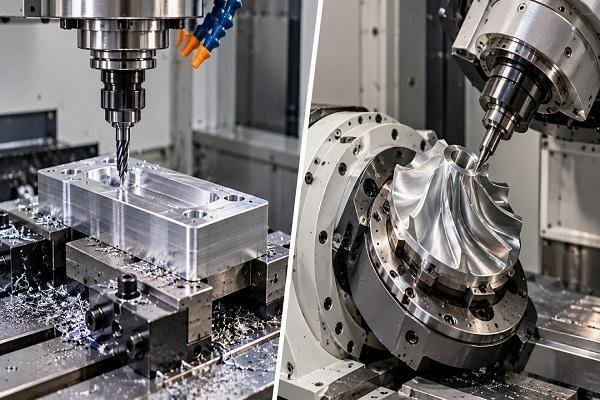
| Axes of motion | X, Y, Z (3 linear axes) | X, Y, Z plus 2 rotary axes selected from A, B, and C |
| Typical geometry fit | Flat or simple prismatic parts with features reachable from one tool orientation | Complex curves, compound angles, undercuts, multi-face features |
| Setup requirements | Often needs multiple setups for multi-face parts | Can often reach multiple faces in a single setup |
| Programming complexity | Generally simpler and faster to program | Requires more advanced CAM programming and simulation |
| Typical hourly machine rate | Generally lower | Generally higher |
| Where it often wins on total cost | High-volume runs of simple geometry | Low-volume, high-complexity parts where fewer setups offset the rate |
| Common applications | Brackets, plates, enclosures, simple housings | Aerospace components, medical implants, turbine blades, impellers |
How 3-Axis CNC Machining Works
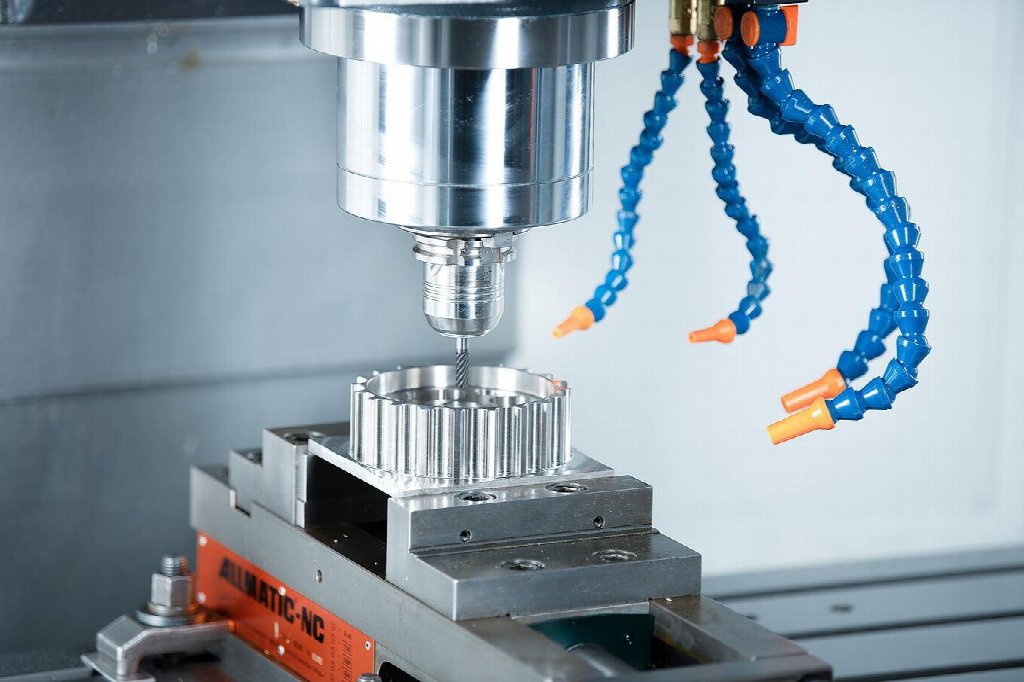
In 3-axis machining, cutting motion occurs along the X, Y, and Z linear axes, without rotational positioning of the workpiece during cutting. 3-axis machining remains widely available and is a core capability in many machine shops. Parts with features reachable from one tool orientation can often be completed in a single setup. Features on additional faces or involving compound angles usually require multiple setups with re-fixturing and re-establishing datums.
How 5-Axis CNC Machining Works
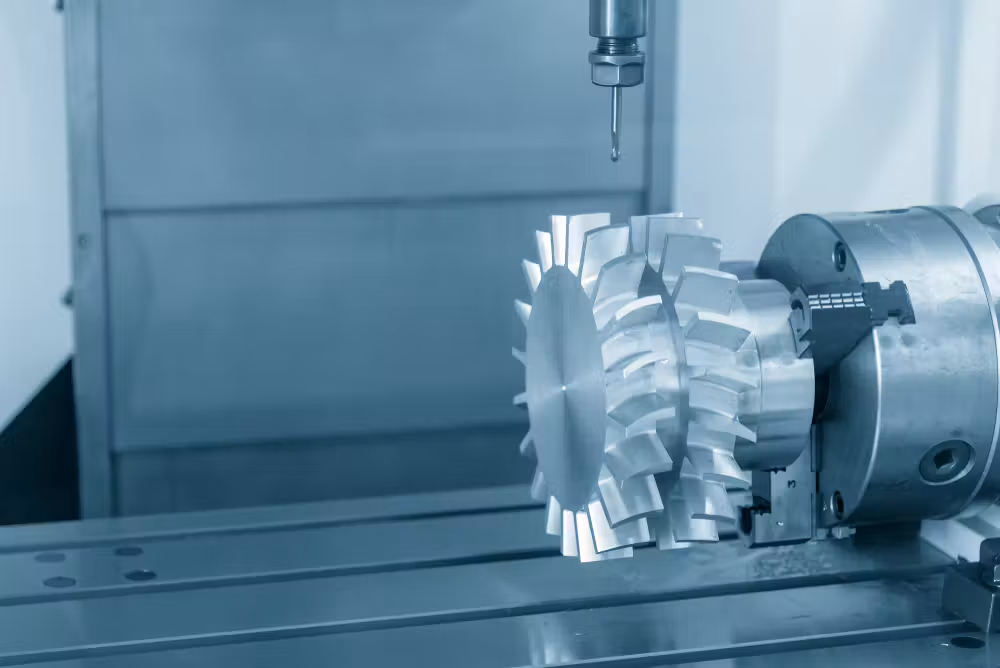
5-axis machining adds two rotary axes selected from A, B, and C, depending on the machine configuration. These rotary axes allow the tool or table to tilt and rotate, bringing more of the part within reach without manually repositioning the workpiece.
3+2 (Indexed) vs. Simultaneous 5-Axis Machining
3+2 (indexed) 5-axis locks the rotational axes for each cut and machines in three axes at a time, mainly repositioning the part. Simultaneous 5-axis moves all five axes during the cut and is typically needed for complex curved surfaces such as turbine blades. Many 5-axis applications can be handled with 3+2 machining because it covers a wide range of geometries without the added programming complexity of simultaneous 5-axis machining.
Geometry and Design Complexity: Which Process Fits Your Part
Geometry is usually the first filter. Flat or moderately contoured parts with features on limited faces often suit 3-axis well. Compound angles, deep angled pockets, undercuts, or multi-direction features in one setup are where 5-axis tends to help more. A small design change sometimes brings a part back within 3-axis reach at lower cost, so reviewing geometry with a supplier before finalizing the design is usually worth the step.
Tolerance, Surface Finish, and Accuracy Differences
5-axis is not automatically more accurate. A simple part done in one 3-axis setup can hold tolerances just as tight. The real advantage appears on multi-face parts: fewer setups mean fewer re-fixturing steps and less chance for alignment errors. Continuous tool paths in simultaneous 5-axis can smooth complex curves better than multiple 3-axis passes, but on simpler geometry a well-programmed 3-axis job can match the finish.
Cycle Time, Lead Time, and Cost Comparison
3-axis programming is usually faster and needs less specialized CAM experience. 5-axis work, especially simultaneous, takes more programming time and expertise, which typically means a higher hourly rate.
That higher rate does not always mean higher total cost. When a part would need several 3-axis setups, the time saved by one 5-axis setup can offset the rate and sometimes produce a lower total cost. For simpler parts the opposite is usually true. Comparing quotes for both approaches is the only reliable way to know.
Production Volume Considerations
Volume shifts the numbers. Low-volume or prototype runs of complex parts often favor 5-axis because it can avoid custom fixtures for multiple 3-axis setups. High-volume runs of simpler geometry may favor 3-axis once fixturing costs are amortized, although automation, cycle time, and supplier capacity can affect the final cost comparison. Machine availability can also affect lead time, so ask about it directly.
When 5-Axis CNC Machining Tends to Make Sense
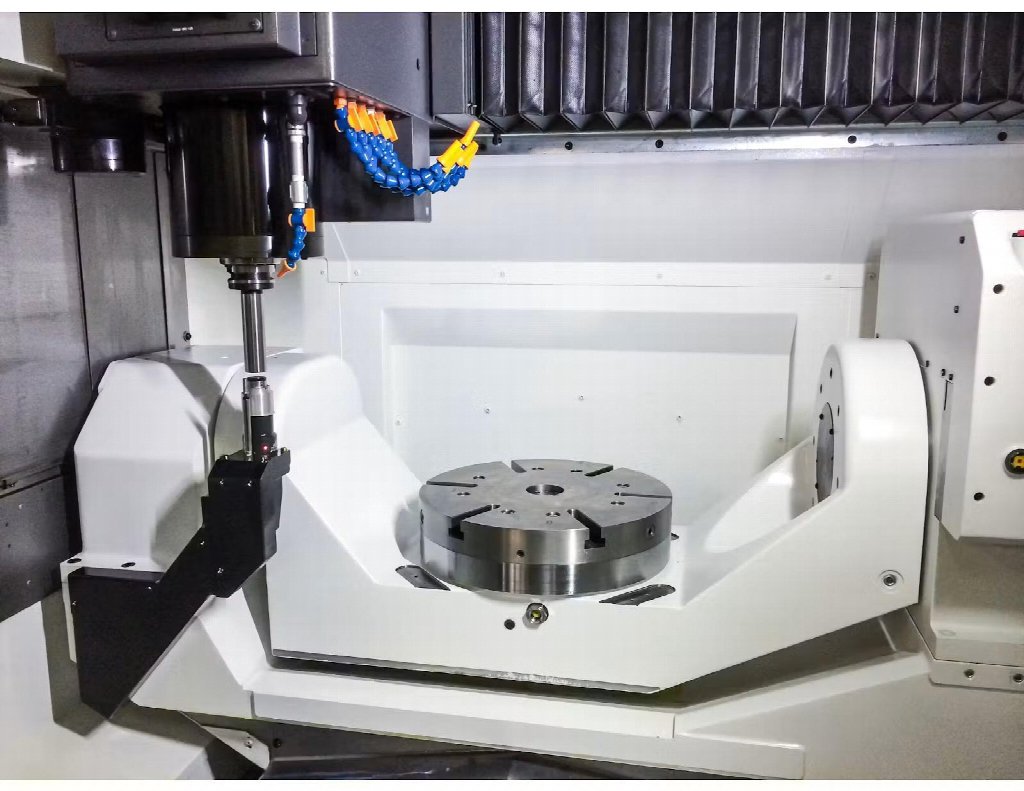
5-axis tends to make sense for aerospace parts with complex curves, medical implants with organic shapes, turbine blades and impellers with compound angles, and parts that need multiple faces cut in one setup to hold positional tolerances. Geometry drives the choice, not a preference for a more advanced process.
Shops offering5-axis CNC machining can often machine these multi-face parts in a single setup, reducing the accuracy risk that comes with repeated 3-axis repositioning.
When 3-Axis CNC Machining Is the Better Choice
3-axis remains the practical choice for flat or simple prismatic parts, high-volume work where fixturing costs spread across many units, budget-sensitive jobs that don’t need multi-axis reach, and rapid prototypes of simple components. For many everyday mechanical parts, 3-axis is simply the more efficient process.
Questions to Ask Your CNC Machining Supplier Before Choosing a Process
Ask whether the geometry truly needs 5-axis or could be done with 3-axis and smart fixturing. Check the supplier’s capacity and programming experience for the proposed process. Confirm how dimensional tolerances and surface finish will be verified, including the supplier’s CMM capability, surface-roughness measurement methods, and first-article inspection process. And request the real cost and lead-time difference between both approaches for your specific part.
Conclusion: Matching the Process to the Part
The right process depends on the part, not on which technology sounds more capable. Simple flat geometry usually favors 3-axis. Complex curves, undercuts, and multi-face features often favor 5-axis. Low-volume complex parts often shift cost toward 5-axis; high-volume simple parts usually favor 3-axis. None of these are fixed rules. Review geometry, tolerances, and volume with a supplier who can quote both approaches honestly.
Frequently Asked Questions
Is 5-axis CNC machining more accurate than 3-axis?
Not automatically. A simple part on a 3-axis mill can hold tolerances as tight as one on a 5-axis mill. The accuracy edge of 5-axis appears mainly on complex multi-face parts, where fewer setups reduce alignment error risk.
Why is 5-axis machining more expensive than 3-axis?
5-axis machines cost more to buy and maintain, and programming (especially simultaneous) takes more time and specialized expertise. That usually means a higher hourly rate, though total part cost can still be lower for complex geometry once fewer setups are counted.
Can 3-axis machines produce complex parts with multiple setups?
Often yes. Multiple 3-axis setups can reach features on several faces, but each setup adds time, cost, and a small alignment risk. Whether the trade-off works depends on the part’s tolerances and how many setups are required.
What industries typically require 5-axis CNC machining?
Aerospace, medical device, and energy sectors commonly use 5-axis machining for complex curved surfaces and tight-tolerance parts such as turbine blades, implants, and structural components. Many parts in these industries are still made on 3-axis equipment when geometry allows.
How do I know if my part design requires 5-axis machining?
Count how many faces need features and whether any involve compound angles or undercuts a 3-axis tool cannot reach in one setup. A supplier’s engineering team can usually confirm this quickly from the drawing, so ask before assuming either process is required.